 Sonoran Desert landscape
The Fourth World · World IV
The Fourth World
Corn planted deep in desert sand. Tobacco grown from seed and tended with care. Seeds passed from grandmother to granddaughter. This world gathers what the peoples of North America have shared publicly about living with plants, and the responsibilities that come with them.
Saguaro National Park, Arizona. National Park Service photograph, public domain. Landscape shown for atmosphere, not as any nation's homeland.
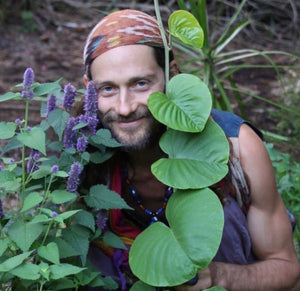
Why I'm building Four Worlds
When I hold a seed, I think about the people who planted it before me. Someone watched the weather, tended the earth, chose what to save, and put it aside for another season. How many prayers were spoken over this seed's ancestors? How many moments of community love did they witness? To me, a seed carries the memory of a culture: the love humanity can have when it is bound in sacred reciprocity with the Earth. Planting it asks something of me in return. The message I am receiving is to help make sure people have access to these sacred genetics, so they can enter the legacy of each culture's wisdom and gifts, which help so many people return to the deep connection our souls have with the Earth.
I'm building Four Worlds so we can slow down long enough to listen. Across Amazonia, Africa, Hawaiʻi and North America, you'll meet people who have shared their teachings publicly, see some of the places that shaped those teachings, and learn how particular plants are grown, cared for and passed on.
Here on Maui, I get to live these questions. What will I tend? What will I save? What will still be here for the people who come after me? That's what sacred reciprocity means to me, and it's why I'm building this.
Karuna Williams, founder · a personal reflection, not a teaching of any nation
How to read this world
North America is home to hundreds of Indigenous nations. Each has its own language, its own relationship with land and its own ways of caring for plants. In this world we keep them distinct.
- Where a teaching is Hopi, we say so.
- Where it belongs to another nation, we name that nation.
- Where we speak as Amauizon, we say that too.
Everything here comes from material that Indigenous people, their nations and institutions, museums and universities have chosen to publish, and every page lists its sources. This world does not speak for any nation and is not endorsed by any nation; where a teaching is shared, it is attributed to the people who made it public. The desert and canyon photographs set a mood; they are not pictures of any nation's homeland.
Enter
Many nations, many plants
Plant knowledge in North America is as varied as the land: wild rice lakes in the Great Lakes, camas meadows on the Plateau, saguaro in the Sonoran Desert, cedar on the Northwest Coast. A plant's name, its uses and its stories differ from nation to nation. One featured plant per nation does not mean that plant belongs to that nation alone. These are a few public records, each attributed.
| Nation | Region | Plant | What the public record says |
|---|---|---|---|
| Anishinaabe (Ojibwe) | Great Lakes | Manoomin, wild rice (Zizania palustris) | Oral tradition tells of a migration west to the place where “the food grows on water” (GLIFWC). |
| Tohono O'odham | Southwest | Saguaro (Carnegiea gigantea) | The mid-July fruit harvest uses a pole made from saguaro ribs, and marks the start of the O'odham New Year (Tucson Spotlight). |
| Pawnee | Great Plains | Pawnee corn (Zea mays) | The Pawnee Seed Preservation Society regrows heritage corn with Nebraska farmers and returns the harvest to the Pawnee in Oklahoma (Flatwater Free Press). |
| Haudenosaunee (Seneca) | Northeast | White corn (Zea mays) | The Iroquois White Corn Project, started by Dr. John Mohawk (Seneca), brings white corn back as a staple (Ganondagan). |
| Menominee | Great Lakes | Eastern white pine (Pinus strobus) | The tribe manages its forest for the long term; some white pine stands are over 200 years old (American Forests). |
| Nimiipuu (Nez Perce) | Plateau | Common camas (Camassia quamash) | The National Park Service restores camas on Weippe Prairie with student monitoring that includes Nez Perce youth (NPS). |
| Karuk | California | Tanoak acorn (Notholithocarpus densiflorus) | A 2011 cultural burn in a tanoak gathering area improved acorn quality (NOAA Climate.gov). |
| Yup'ik | Alaska | Cloudberry (Rubus chamaemorus) | Mixed with other berries into akutaq; elders say berries are more plentiful in snowier years (ELOKA). |
| Nêhiyawak (Plains Cree) | Canada | Saskatoon berry (Amelanchier alnifolia) | The berry, and the city, are named from a Cree word for the fruit, a major ingredient in pemmican (Canadian Encyclopedia). |
Tobacco: one genus, many relationships
Tobacco belongs to the genus Nicotiana in the nightshade family. Two species travelled the world with people: N. rustica, the strong tobacco grown across eastern North America before European contact, and N. tabacum, the tobacco of commerce. North America also has its own wild tobaccos, such as coyote tobacco (N. attenuata).
Native-led health programmes draw a clear line between traditional and commercial tobacco. The Minnesota Department of Health describes traditional tobacco as “natural, not inhaled or addictive”, and notes that some tribes use no traditional tobacco at all (MDH). For Amauizon, tobacco is a plant to grow, study and care for.
Our Plant Medicine Ark on Maui keeps tobacco seed lines that came to us under these names: Aztec, Huichol, Oneida, Hopi, and Rapa Nui from Easter Island. Each name records where a line was said to come from. A name alone does not show that a seed came from that people, and none of these communities has endorsed our garden. We are matching each line to its species before any seed is offered.
Seeds coming home
Some of the most hopeful work in Indian Country today is about seeds returning to the people who kept them: Hopi seed rematriation through the Hopi Tutskwa Permaculture Institute, Pawnee corn brought back from a handful of kernels, Haudenosaunee white corn as a staple again, and community gardens growing traditional tobacco so that people need not turn to commercial cigarettes.
Connections to the Botanical Library
Our commitments in this world
- Tobacco. We grow tobacco and offer selected seeds for ethnobotanical education and preservation. We do not sell tobacco leaf or smoking products.
- Truthful pictures. Every photograph is captioned with what and where it shows and credited to its source. Landscape photographs are not presented as any nation's homeland.
- Attribution. Each teaching is named to the nation the published record names, and each page lists its sources.
- Listening. If you belong to a nation named here and something should be changed or removed, please tell us through our contact page. We will listen and act.
With gratitude to all the nations whose publicly shared knowledge appears here. Any errors are ours.