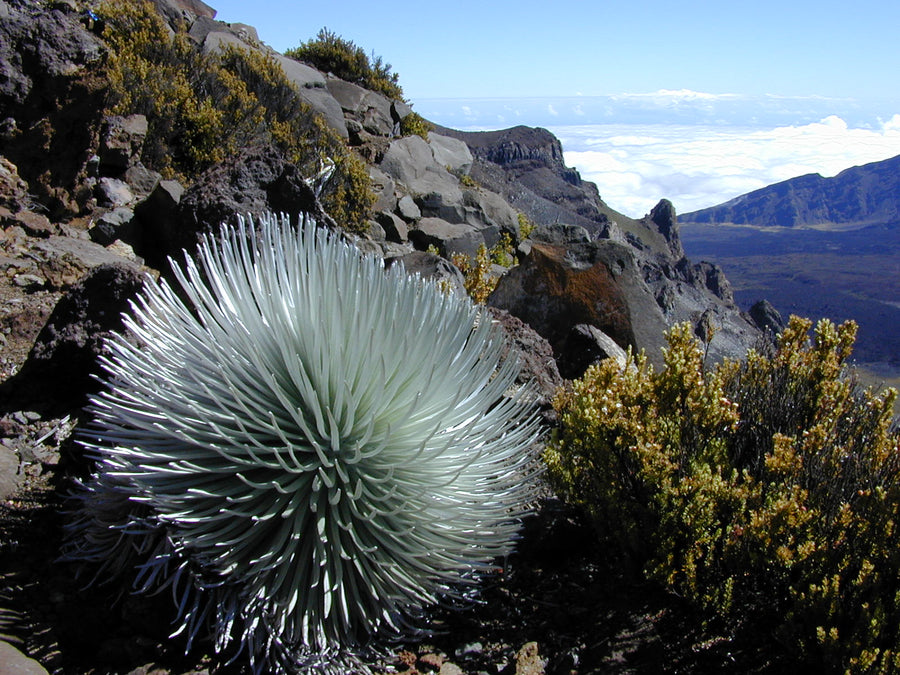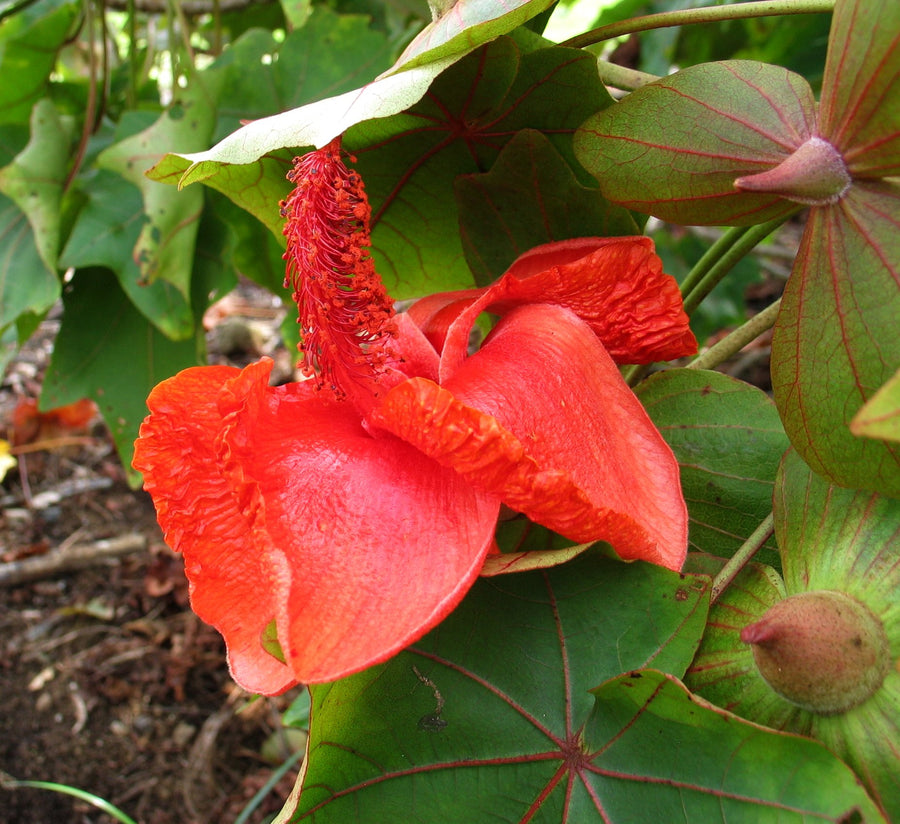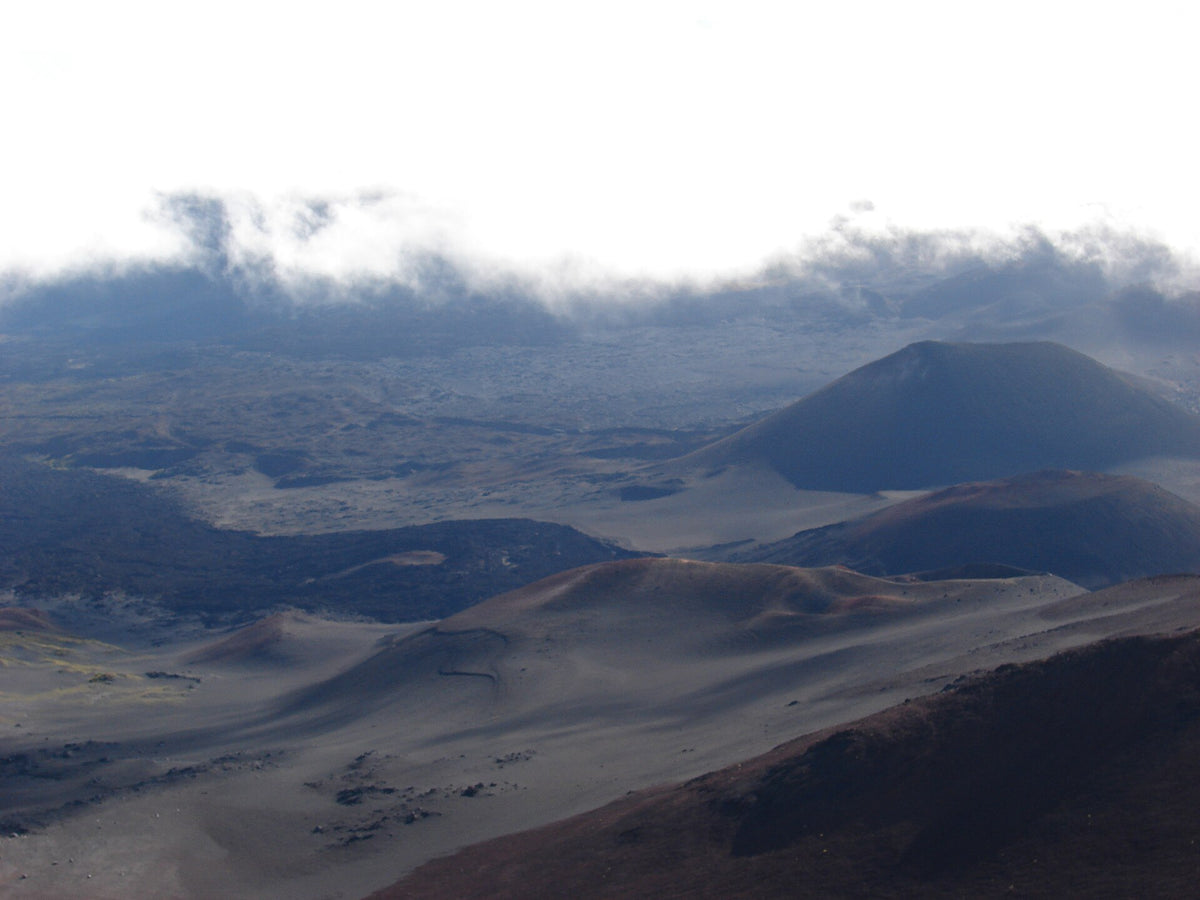
Silverswords on the volcanic slopes near the Haleakalā Visitor CenterSilversword habitat · Haleakalā National Park

Living Botanical Library · Botanical Conservation

Hawaiian Botanical Conservation

Preserving Hawaiʻi’s botanical heritage

ʻĀhinahina habitat near the Haleakalā Visitor Center, Haleakalā National Park, Maui. Photo: Forest and Kim Starr / Wikimedia Commons, CC BY 3.0 US.

Hawaiian Botanical Conservation introduces seven of Hawaiʻi’s rarest native plants: a state flower, two cliff-dwelling lobelioids, a rain-forest hāhā, a hardwood that once shaped daily life, a silver-leaved icon of Haleakalā and a dry-forest tree with flowers made for birds that no longer exist. Each profile joins the plant’s place in Hawaiian life with its ecology and its conservation story.

These plants are still here because of people: Hawaiian cultural practitioners who carry their names, uses and moʻolelo; conservation growers who raise seedlings and cuttings in nurseries across the islands; community volunteers and activists who fence, weed and replant native forests; and the botanical gardens and seed banks that safeguard the rarest of them. We honour their work, and we tell these plants’ stories so that more people will know them and value them. Sources appear with each profile and at the end of this page.

Maʻo hau hele

Hibiscus brackenridgei A.Gray

Malvaceae · mallow family

ESA Endangered (1994) · IUCN Critically Endangered · PEPP target (DLNR)
Where it grows
Endemic to Hawaiʻi. Subsp. brackenridgei on Lānaʻi, Maui and Hawaiʻi Island; subsp. mokuleianus in the Waiʻanae Mountains of Oʻahu; subsp. molokaiana extinct in the wild (DLNR).
Threats
Browsing by axis deer, goats and cattle; competition from alien plants; fire; seed-eating rats; Chinese rose beetle; very small, scattered populations (DLNR; USFWS 1994).

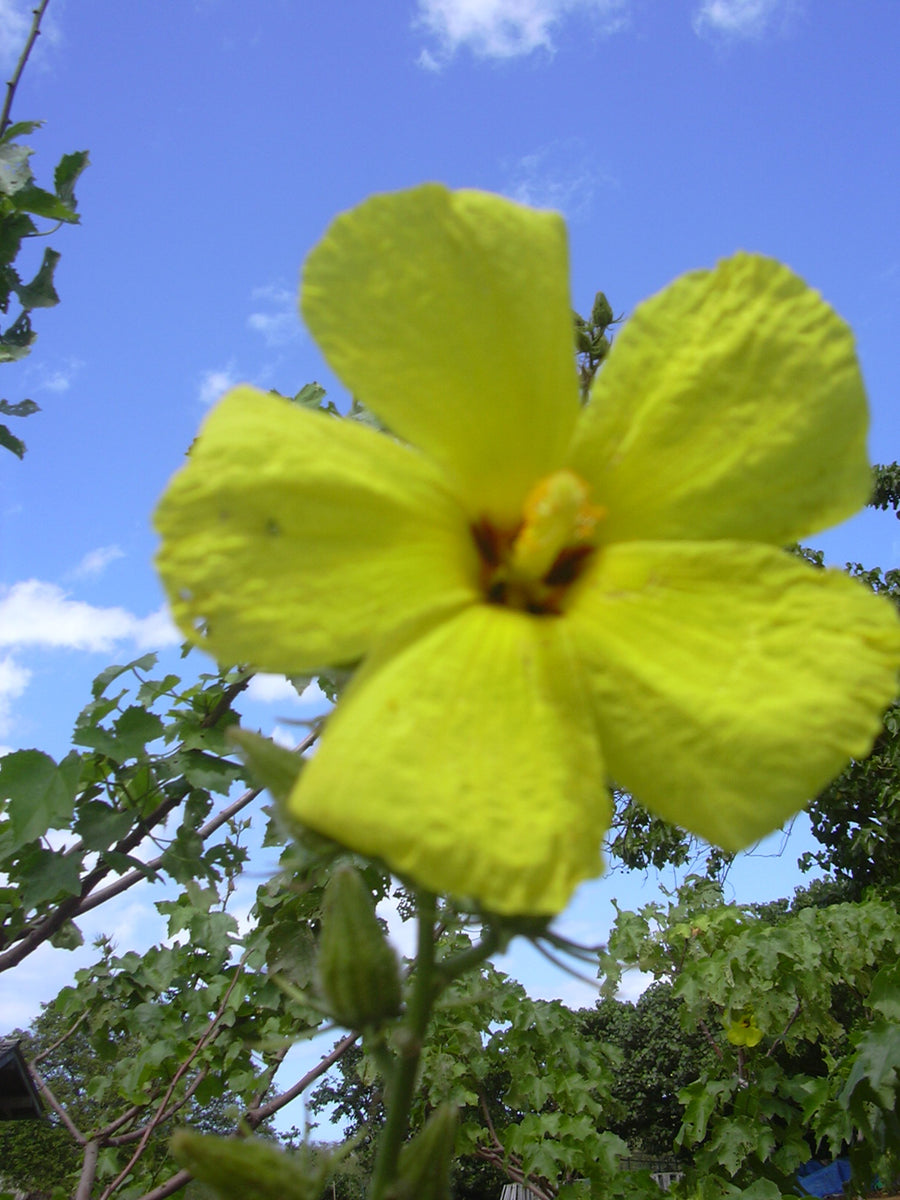
In 1988 the Hawaiʻi Legislature named maʻo hau hele, the native yellow hibiscus, the official state flower. Hibiscus had been the territorial flower since 1923, with no species named, and many people had come to think of the red hibiscus as the islands’ emblem (Maui Nui Botanical Gardens). Maui Nui Botanical Gardens also records that Hawaiians drew a blue-grey dye for kapa from its flowers.

It is a sprawling shrub or small tree of lowland dry forest and shrubland, with large yellow flowers that often carry a maroon centre. That habitat is among the most altered in Hawaiʻi. When the U.S. Fish and Wildlife Service listed the species in 1994, it knew of about twelve populations holding roughly sixty plants, and recorded a ranch road bulldozed beside one of them in 1989 (USFWS 1994). Today the state’s official flower is rarer in the wild than almost any garden plant that shares its name.

Recovery work

Hawaiʻi’s Division of Forestry and Wildlife lists subspecies brackenridgei and mokuleianus as Plant Extinction Prevention Program targets, and critical habitat has been designated for mokuleianus (DLNR). The species is grown for education in botanical collections, including Maui Nui Botanical Gardens’ Hawaiian native plant collection.

Sources
  1. U.S. Fish and Wildlife Service (1994). Endangered status for 12 plants from the Hawaiian Islands (includes Hibiscus brackenridgei). 59 FR 56333, 10 November 1994.
  2. Hawaiʻi DLNR, Division of Forestry and Wildlife. Maʻo hau hele, Rare Plant Program species page. dlnr.hawaii.gov
  3. U.S. Fish and Wildlife Service (1994). Endangered Status for 12 Plants From the Hawaiian Islands. Federal Register 59(217), 10 November 1994. govinfo.gov
  4. Maui Nui Botanical Gardens. Maʻo hau hele (Hibiscus brackenridgei). mnbg.org
  5. Keir, M. (2018). Hibiscus brackenridgei. IUCN Red List of Threatened Species 2018: e.T62743A78757481.
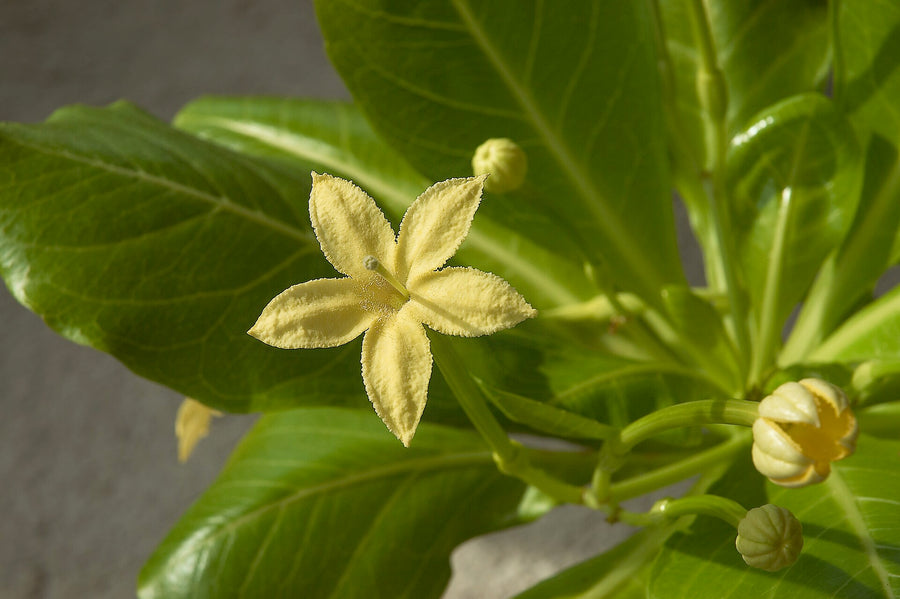
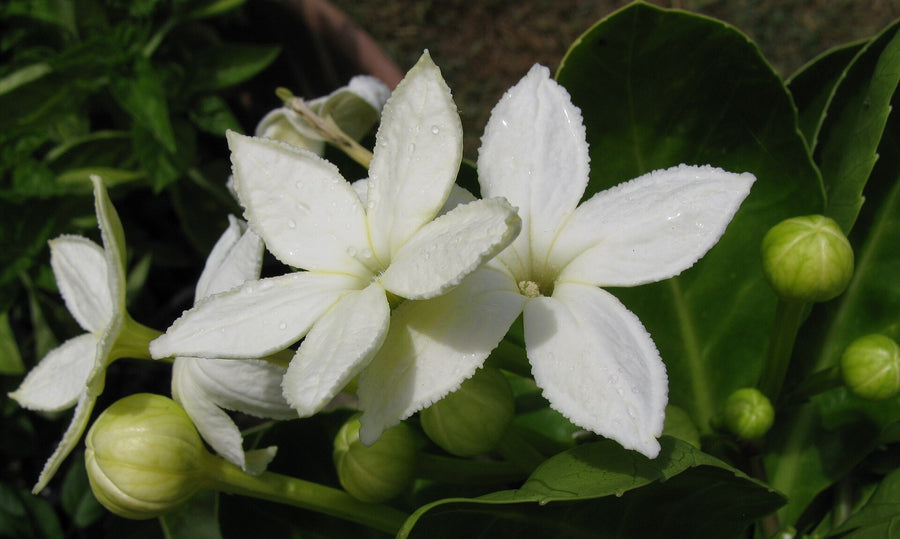
Flowers of ʻālula (Brighamia insignis)

Photo: Wouter Hagens / Wikimedia Commons, CC BY-SA 3.0.

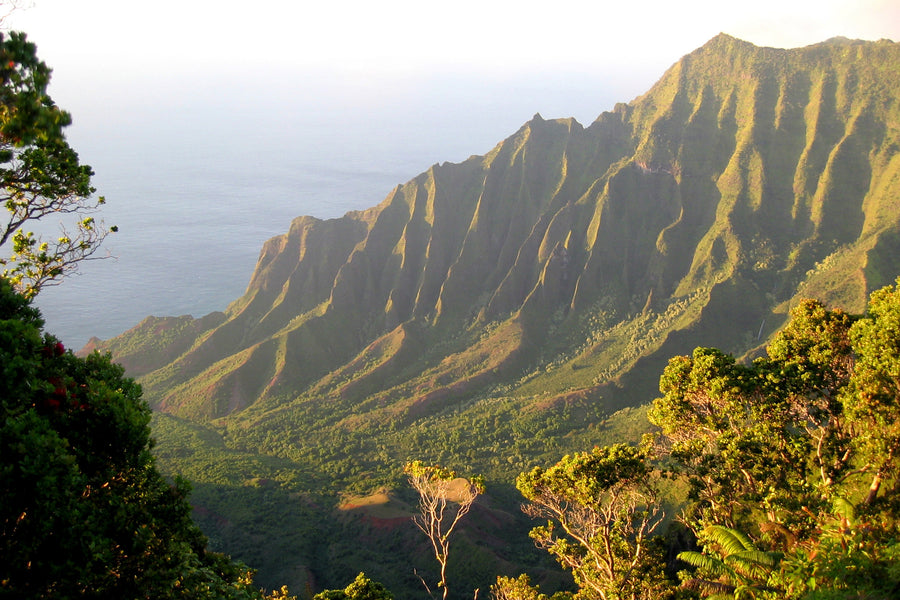
Fluted ridges of Kalalau Valley on the Nā Pali coast of KauaʻiKalalau Valley · Nā Pali, Kauaʻi

Kalalau Valley on the Nā Pali coast, Kauaʻi, where ʻālula once grew on the sea cliffs. Photo: Dcrjsr / Wikimedia Commons, CC BY 3.0.

ʻĀlula · ʻōlulu

Brighamia insignis A.Gray

Campanulaceae · bellflower family (Hawaiian lobelioids)

ESA Endangered (1994) · one plant reported in the wild (NTBG, 2019)
Where it grows
Kauaʻi: sea cliffs of the Nā Pali Coast and the Hāʻupu Range; formerly also Niʻihau, last reported there in 1947 (NTBG).
Threats
Feral goats; introduced grasses and shrubs; rock slides and landslides; hurricanes; wildfire; an introduced spider mite; loss of its pollinator; tiny population (USFWS 1994; Letman 2019).

The ʻālula is a succulent stem topped by a rosette of glossy leaves, which the botanist William Hillebrand compared to a cabbage on a fence post. It grew on rocky ledges and sea cliffs from sea level to about 400 metres, among alaheʻe, ʻākoko and pili grass (USFWS 1994). Its pale yellow, trumpet-shaped flowers are thought to have been pollinated by a large native sphinx moth that now appears to be gone.

When it was listed in 1994, fewer than forty plants remained, and Hurricane ʻIniki in 1992 had destroyed about half of those on the Nā Pali Coast. NTBG reports that the last plant on Mount Hāʻupu died in 2002 and the last seen on the Nā Pali Coast was around 2015. Seed collected on the cliffs and shared with gardens means the ʻālula now grows in thousands of pots worldwide, sold in Europe as a “Hawaii palm,” while it has all but vanished from its own cliffs (Letman 2019).

Recovery work

From the mid-1970s, NTBG botanists Steve Perlman and Ken Wood roped down Kauaʻi’s cliffs to hand-pollinate flowers and collect seed. In 2019 NTBG’s seed bank held more than 15,000 seeds from 52 collections, and the University of Hawaiʻi’s Lyon Arboretum Hawaiian Rare Plant Program about 6,000 more, with duplicates at the National Laboratory for Genetic Resource Preservation (Letman 2019). The U.S. Fish and Wildlife Service opened a new five-year status review of the species in September 2025.

Sources
  1. U.S. Fish and Wildlife Service. List of Endangered and Threatened Plants, 50 CFR 17.12(h): Brighamia insignis, endangered; listing rule 59 FR 9304, 25 February 1994. law.cornell.edu
  2. Letman, J. (2019). The Generations-long Effort to Save Hawaiʻi’s Favorite Cliff Dweller. National Tropical Botanical Garden. ntbg.org
  3. U.S. Fish and Wildlife Service (1994). Determination of Endangered or Threatened Status for 24 Plants From the Island of Kauai, HI. Federal Register 59(38), 25 February 1994. govinfo.gov
  4. U.S. Fish and Wildlife Service (2025). Initiation of 5-Year Status Reviews for 122 Species in Hawaii, Idaho, Oregon, and Washington. Federal Register document 2025-17566. public-inspection.federalregister.gov
Pua ʻala (Brighamia rockii) in flower

Photo: Wiliwili Hawaiian plants / Wikimedia Commons, CC BY-SA 3.0.

Towering green sea cliffs on the north shore of Molokaʻi seen from KalawaoNorth-shore sea cliffs · Kalawao, Molokaʻi

The north-shore sea cliffs of Molokaʻi, home of the last wild pua ʻala. Photo: Kcurrytampa / Wikimedia Commons, CC BY-SA 4.0.

Pua ʻala

Brighamia rockii H.St.John

Campanulaceae · bellflower family (Hawaiian lobelioids)

ESA Endangered (1992) · IUCN Critically Endangered
Where it grows
Endemic to Molokaʻi: windswept sea cliffs of the north coast of East Molokaʻi and the islet of Huelo; possibly once on Lānaʻi and Maui.
Threats
Goats, deer and rats; invasive plants; landslides and erosion worsened by feral ungulates; very small population; climate change (DLNR).

Pua ʻala means fragrant flower, and the name fits: this Molokaʻi cousin of the ʻālula carries clusters of three to eight scented flowers, green-yellow tubes opening into five white lobes (DLNR). It grows on the towering sea cliffs of Molokaʻi’s north shore, rooted in rock crevices above the surf. The botanist Joseph Rock, for whom it is named, called it “a most grotesque plant” (Letman 2019).

Its isolation has protected it, and now makes it hard to protect. NTBG estimated in 2019 that about thirty plants remained. The largest population, at Waiehu, had not been visited since 2011 because landslides made the approach too dangerous, and the last seed collection, by the Plant Extinction Prevention Program, was made in December 2014. Wild plants set little seed, probably because pollinators are scarce (Letman 2019).

Recovery work

NTBG botanists have hand-pollinated wild plants and banked seed: in 2019 its seed bank held more than 11,000 seeds from 23 collections, and Lyon Arboretum’s Hawaiian Rare Plant Program about 14,000. NTBG has also worked with Kalaupapa National Historical Park, which has planted pua ʻala back onto the cliffs (Letman 2019). Plant Extinction Prevention Program botanists made the most recent recorded seed collection, in December 2014.

Sources
  1. U.S. Fish and Wildlife Service. List of Endangered and Threatened Plants, 50 CFR 17.12(h): Brighamia rockii, endangered; listing rule 57 FR 46325, 8 October 1992. law.cornell.edu
  2. Hawaiʻi DLNR, Division of Forestry and Wildlife. Pua ʻala, Rare Plant Program species page. dlnr.hawaii.gov
  3. Letman, J. (2019). The Generations-long Effort to Save Hawaiʻi’s Favorite Cliff Dweller. National Tropical Botanical Garden. ntbg.org
  4. Endangered Species (Gale/Encyclopedia.com). Puaala (Brighamia rockii). encyclopedia.com

Hāhā

Cyanea hamatiflora Rock subsp. hamatiflora

Campanulaceae · bellflower family (Hawaiian lobelioids)

ESA Endangered (1999) · IUCN Critically Endangered (2003 assessment)
Where it grows
Endemic to windward East Maui: Kīpahulu Valley within Haleakalā National Park, and the Waikamoi to Koʻolau Gap area; montane wet forest at about 975–1,500 m.
Threats
Feral pigs, which damage habitat and peel bark; landslides; competition from Maui pāmakani (Ageratina adenophora) and other invasive plants; rats and slugs (USFWS 1997).

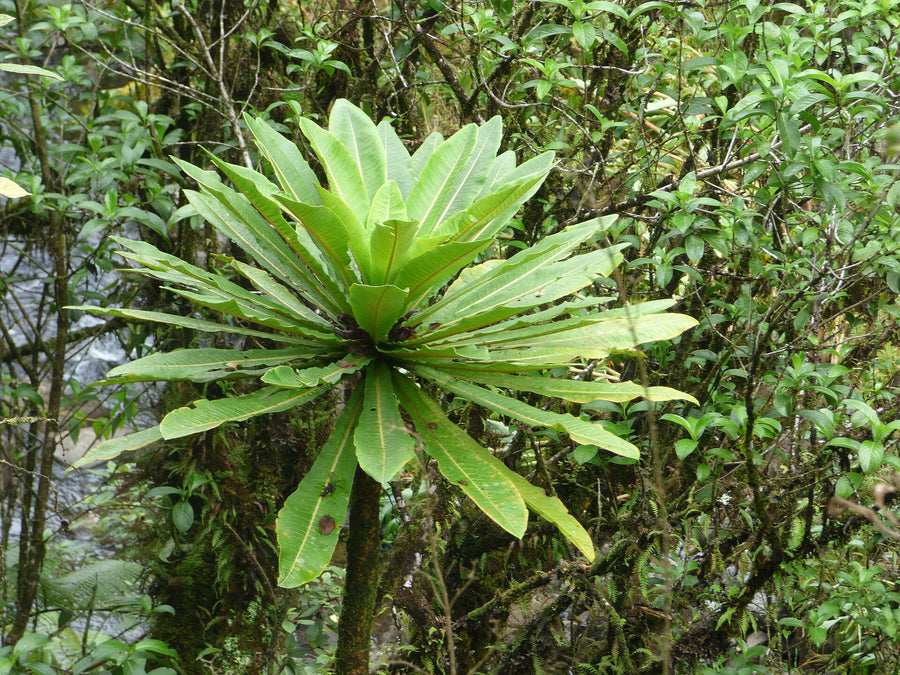
Hāhā is the Hawaiian name shared by many Cyanea, the largest group of the Hawaiian lobelioids, whose ancestors NTBG dates to the islands about thirteen million years ago. This one is a palm-like shrub of the rain forest on Haleakalā’s windward flank, growing in the shade of ʻōhiʻa with an understorey of tree ferns and native shrubs. Its species name, hamatiflora, refers to its hooked flowers.

The forests it lives in are the upland wao akua of Hawaiian tradition, the realm of the gods and the source of water for the valleys below. When it was proposed for listing in 1997, the U.S. Fish and Wildlife Service knew it from only two areas, Kīpahulu Valley and the Waikamoi to Koʻolau Gap, with perhaps 70 to 125 plants, although it had once been recorded from eight places between Puʻu o Kākaʻe and Manawainui. It was listed as Endangered in 1999 with nine other plants of Maui Nui.

Recovery work

Most known plants grow inside Haleakalā National Park, where it shares the protection given to Kīpahulu Valley’s forest. The U.S. Fish and Wildlife Service reviewed the subspecies’ status in a 2009 five-year review, and the IUCN assessment by Bruegmann and Caraway (2003) placed it at no more than 250 individuals and declining.

Sources
  1. U.S. Fish and Wildlife Service. List of Endangered and Threatened Plants, 50 CFR 17.12(h): Cyanea hamatiflora ssp. hamatiflora, endangered; listing rule 64 FR 48307, 3 September 1999. law.cornell.edu
  2. U.S. Fish and Wildlife Service (1997). Proposed Endangered Status for 10 Plant Taxa From Maui Nui, Hawaii. Federal Register 62(94): 26757–26770. govinfo.gov
  3. U.S. Fish and Wildlife Service (1999). Final Endangered Status for 10 Plant Taxa From Maui Nui, HI. Federal Register 64: 48307. fws.gov
  4. Bruegmann, M. M. & Caraway, V. (2003). Cyanea hamatiflora subsp. hamatiflora. IUCN Red List of Threatened Species: e.T34044A9833876.

Kauila · kauwila

Colubrina oppositifolia Brongn. ex H.Mann

Rhamnaceae · buckthorn family

ESA Endangered (1994) · IUCN Critically Endangered
Where it grows
Oʻahu (Waiʻanae Mountains), leeward Hawaiʻi Island, and a single tree at Honokōwai, West Maui; dry to mesic forest (Native Plants Hawaiʻi; DLNR).
Threats
Fire; invasive plants such as fountain grass, lantana and Christmas berry; the introduced black twig borer; seed-eating rats; feral pigs and other ungulates; limited regeneration (USFWS 1994; DLNR).

Kauila wood is so dense that it sinks in water, and Hawaiians used it where other cultures used metal. Native Plants Hawaiʻi, drawing on Krauss, Buck and Abbott, lists kapa beaters and grooving boards, ʻōʻō digging sticks, spears for the sports of ʻōʻō ihe and kaka lāʻau, hōlua sled runners reserved for aliʻi, hula implements and the bow of the ʻūkēkē, a musical instrument. Its leaves and bark gave a bluish dye for kapa. The name is shared with a second tree, Alphitonia ponderosa.

Kauila belongs to the lowland dry and mesic forests, often dominated by lama on rough ʻaʻā lava. At listing in 1994, the U.S. Fish and Wildlife Service knew of about 94 trees in six populations on Oʻahu and 185 to 205 in seven populations on Hawaiʻi Island. A tree that once shaped daily life across the islands is now a rarity that few woodworkers will ever touch.

Recovery work

Federal recovery planning for the Big Island plant cluster (1996) records that NTBG germinated and propagated the species, and that Hawaiʻi’s Division of Forestry and Wildlife raised plants from seed and planted them into fenced enclosures at Puʻuwaʻawaʻa (as summarised by Gale). Recovery needs named there include protection from ungulates, weed control, fire reduction and research on the black twig borer.

Sources
  1. U.S. Fish and Wildlife Service. List of Endangered and Threatened Plants, 50 CFR 17.12(h): Colubrina oppositifolia, endangered; listing rule 59 FR 10305, 4 March 1994. law.cornell.edu
  2. Hawaiʻi DLNR, Division of Forestry and Wildlife. Kauila, Rare Plant Program species page. dlnr.hawaii.gov
  3. Native Plants Hawaiʻi (University of Hawaiʻi). Colubrina oppositifolia. nativeplants.hawaii.edu
  4. U.S. Fish and Wildlife Service (1994). Determination of Endangered or Threatened Status for 21 Plants From the Island of Hawaii. Federal Register 59(43), 4 March 1994. govinfo.gov
  5. Endangered Species (Gale/Encyclopedia.com). Kauila (Colubrina oppositifolia). encyclopedia.com

ʻĀhinahina

Argyroxiphium sandwicense subsp. macrocephalum (A.Gray) Meyrat

Asteraceae · daisy family

ESA Threatened (1992) · IUCN Critically Endangered (2020)
Where it grows
Endemic to Haleakalā, Maui: cinder slopes in and around the summit crater, almost entirely within Haleakalā National Park.
Threats
Drought and warming; invasive Argentine ants and yellowjackets that prey on its native bee pollinators; seed-eating insects; its single, small range (Krushelnycky et al. 2013; Gale).

ʻĀhinahina means very grey, after the silver hairs that cover its sword-shaped leaves and shield them from the fierce sun, cold and drought of the summit. Each plant may live for decades as a shining rosette, then send up a single tall spike of flowers, set seed and die. Visitors to Haleakalā have known it for generations; Krushelnycky and colleagues note that one to two million people see it each year.

By the 1920s, browsing goats and cattle, and visitors who uprooted plants, had brought it close to extinction, and the Maui Chamber of Commerce petitioned Washington for its protection. In 1935 a ranger counted 1,470 plants on Ka Moa o Pele, and the whole population was estimated at about 4,000. With protection it grew to about 64,800 plants by 1991 (Gale, drawing on federal recovery planning). Since then, warmer and drier conditions have brought a substantial climate-associated decline, worst at the lower edge of its range (Krushelnycky et al. 2013).

Recovery work

The National Park Service fenced Haleakalā’s boundary against feral goats in the 1980s and largely ended vandalism and ungulate browsing. The National Parks Conservation Association describes park staff collecting seed, raising plants in a nursery and returning them to former habitat, alongside work to keep Argentine ants from spreading. The species has also been propagated at NTBG.

Sources
  1. U.S. Fish and Wildlife Service. List of Endangered and Threatened Plants, 50 CFR 17.12(h): Argyroxiphium sandwicense ssp. macrocephalum, threatened; listing rule 57 FR 20772, 15 May 1992. law.cornell.edu
  2. Krushelnycky, P. D. et al. (2013). Climate-associated population declines reverse recovery and threaten future of an iconic high-elevation plant. Global Change Biology 19(3): 911–922. doi.org
  3. National Parks Conservation Association. ʻĀhinahina. esa.npca.org
  4. Endangered Species (Gale/Encyclopedia.com). Haleakala Silversword. encyclopedia.com
  5. Keir, M. & Caraway, V. L. (2020). Argyroxiphium sandwicense subsp. macrocephalum. The IUCN Red List of Threatened Species 2020: e.T44159A78766492 (Critically Endangered). doi.org

Kokiʻo · hau heleʻula

Kokia drynarioides (Seem.) Lewton

Malvaceae · mallow family

ESA Endangered (1984) · IUCN Critically Endangered · PEPP species
Where it grows
Endemic to Hawaiʻi Island: North Kona, in dry forest on rough lava with thin, well-drained soil (NTBG).
Threats
Cattle and feral goats; rodents and insects that eat its seeds; fountain grass and the wildfire it fuels; extremely small wild population (Center for Plant Conservation).

Kokiʻo is a small dry-forest tree with large, curved, orange-red flowers. NTBG describes those flowers as adapted to curved-billed birds, including the now-extinct Hawaiian honeyeaters that once fed on their nectar. Native Hawaiians made a red dye for fishing nets from its sap (NTBG), and the Center for Plant Conservation records that its petals gave further dyes, its flowers were worn in lei, and that early Hawaiians cultivated the tree in Kona.

Much of Kona’s leeward forest was cleared for cattle pasture, and invasive fountain grass has since brought larger and more frequent fires. NTBG reports just five trees known in the wild. The tree has also become a lifeline for a relative: grafts of Kokia cookei, extinct in the wild on Molokaʻi and surviving as some two dozen grafted plants, have been carried on K. drynarioides rootstock (NTBG; DLNR).

Recovery work

Hawaiʻi’s Division of Forestry and Wildlife has led reintroductions, with outplantings recorded in 2004, 2006 and 2015, and Lyon Arboretum is a Center for Plant Conservation partner for the species (CPC). Seeds distributed in earlier decades mean many cultivated trees now grow in Hawaiʻi’s arboreta and botanical gardens (NTBG).

Sources
  1. U.S. Fish and Wildlife Service (1984). Final rule listing Kokia drynarioides as endangered, with critical habitat. 49 FR 47397, 4 December 1984.
  2. Hawaiʻi DLNR, Division of Forestry and Wildlife. Kokiʻo (Kokia drynarioides) species fact sheet: federally listed as endangered; IUCN Red List Critically Endangered (CR D). dlnr.hawaii.gov
  3. National Tropical Botanical Garden. Tropical Plant Database: Kokia drynarioides. ntbg.org
  4. Center for Plant Conservation. Kokiʻo (Kokia drynarioides) plant profile. saveplants.org
  5. Endangered Species (Gale/Encyclopedia.com). Kokiʻo (Kokia drynarioides). encyclopedia.com
  6. Hawaiʻi DLNR, Division of Forestry and Wildlife. Kokiʻo (Kokia cookei), Rare Plant Program species page. dlnr.hawaii.gov

Every plant in this collection is protected under the federal Endangered Species Act and Hawaiʻi’s own endangered species law. None should ever be taken from the wild. To see them, visit the public collections of botanical gardens such as Maui Nui Botanical Gardens, the National Tropical Botanical Garden and Lyon Arboretum, or the native forests of Haleakalā National Park, where staying on trails and cleaning your boots helps keep them safe.

To grow Hawaiian natives at home, choose non-invasive, unlisted species from licensed nurseries. You can learn more about the rarest plants from the Plant Extinction Prevention Program and the Division of Forestry and Wildlife’s Rare Plant Program.

Collection sources
  1. State of Hawaiʻi, DBEDT (2025). State of Hawaiʻi Data Book 2024, Table 5.61: Threatened and Endangered Species, for Hawaii and the United States (USFWS ECOS data as of 1 July 2024). files.hawaii.gov
  2. Bishop Museum. Plants of Hawaiʻi: Summary and Brief Analysis of the Flora. plantsofhawaii.org
  3. National Tropical Botanical Garden. Plant Extinction Prevention Program. ntbg.org
  4. U.S. Fish and Wildlife Service (May 2014). Hawaiʻi’s Plant Extinction Prevention Program Recognized for National Recovery Efforts. fws.gov
  5. Letman, J. (2019). The Generations-long Effort to Save Hawaiʻi’s Favorite Cliff Dweller. National Tropical Botanical Garden. ntbg.org
  6. Hawaiʻi Association of Watershed Partnerships. Forested Watersheds and Cultural Resources. hawp.org