 Cacao pod in our garden on Maui — not Camino Verde
Camino Verde
From the first cacao drinkers of the upper Amazon to a fermentary on the Guayas River
Cacao was first used, as far as anyone knows, in the forests of what is now Ecuador more than five thousand years ago. This is the story of that inheritance, of the Ecuadorian growers and fermenters who carry it today, and of the cacao that travels from Ecuador to us on Maui.
The oldest cacao cup in the Americas
In the Andean foothills of Zamora-Chinchipe, in south-eastern Ecuador, archaeologists excavating Santa Ana–La Florida, a village of the Mayo-Chinchipe-Marañón culture, found three kinds of evidence in its pottery: cacao starch grains, residues of theobromine, and fragments of ancient cacao DNA. Dated to about 5,300 years ago, they are the earliest known traces of cacao use anywhere, and they place the domestication of cacao in the upper Amazon.
Later genetic work on pottery from across Ecuador, Colombia and Peru shows that cacao reached the Pacific coast soon afterwards, carried along exchange routes between the Amazon and the coast. Thousands of years later, and thousands of kilometres north, cacao drinks appear in Olmec, Maya and Mexica life. Each of those cultures shaped its own traditions; the deepest roots, however, are South American.
Evidence: Zarrillo et al., Nature Ecology & Evolution (2018); Lanaud et al., Scientific Reports (2024).
 Santa Ana–La Florida · Zamora-Chinchipe, Ecuador
Aerial view of the Santa Ana–La Florida archaeological site near Palanda, showing the stone foundations preserved by the site museum (2025). Photo: SimonLuzuriaga / Wikimedia Commons, CC BY-SA 4.0. Resized for the web; not otherwise altered.
The seed of gold
Ecuadorians once called cacao pepa de oro, the seed of gold.
- Colonial trade. By the early 1600s ships were carrying cacao north from the port of Guayaquil to New Spain.
- Arriba. Fine cacao from the river country upstream of Guayaquil became known in trade as Cacao de Arriba, "from up-river". It came from the native Ecuadorian type now called Nacional.
- The boom, about 1870–1920. Ecuador became the world's leading cacao exporter around 1900; exports rose from about 12,000 tonnes a year in the 1880s to about 41,000 tonnes in the 1910s.
- Disease and collapse. Frosty pod rot and then witches' broom disease spread through the plantations from the late 1910s. Together with falling world prices, they ended the boom.
- Rebuilding. Ecuador replanted with hybrids from the 1940s onwards. Today most of its planted area is the high-yielding clone CCN-51, while Nacional-type cacao is valued for its aroma. The International Cocoa Organization recognises 75% of Ecuador's cocoa exports as "fine or flavour" cocoa.
 Amauizon garden, Maui
 Amauizon garden, Maui
One tree among many
Cacao is a shade tree of the forest understorey, and for most of its history it has been grown that way: as one plant in a family forest garden, alongside fruit trees, timber, medicinal plants and food crops. In the Kichwa chakra of Napo, in the Ecuadorian Amazon, cacao and guayusa grow among more than a hundred managed species; FAO recognised the Amazonian chakra as a Globally Important Agricultural Heritage System in 2023.
On the coast, too, most Ecuadorian cacao still comes from small family farms. Harvesting, opening pods and fermenting are often shared between neighbours and generations.
Photos here are from our garden on Maui and show the living tree, not Ecuadorian farms.
Flowers on the trunk
Cacao, Theobroma cacao, is a small evergreen tree of about 6–12 m with long, glossy leaves that unfold pink or bronze. Its tiny flowers grow straight from the trunk and older branches, and are pollinated mostly by midges. Each ribbed pod holds some 20–60 seeds in a sweet white pulp. Those seeds, fermented and dried, are cacao beans.
We grow cacao in our garden on Maui. Hawaiʻi is the only U.S. state with commercial cacao farms, and watching our own trees flower and fruit is part of how we learn the plant.
 Green pod · Maui
 Ripening pod · Maui
 Cacao fermenting under banana leaves
Illustrative photograph of box fermentation: fresh cacao beans in a wooden box, covered with cut banana leaves (2016). Photo: Scot Nelson / Wikimedia Commons, public domain (CC0). It does not depict Camino Verde.
A fermentary on the Guayas
Camino Verde is a cacao producer and fermentary in coastal Ecuador, led by its owner and general manager, Vicente Norero. It began as a single estate near Balao, south of Guayaquil, and its operations are now based in Durán, across the Guayas River from Guayaquil.
Chocolate makers who buy from Camino Verde describe a producer that buys fresh, wet cacao from many farmers and grower associations, including Nacional growers in Los Ríos province, and then ferments and dries it centrally. Norero, who has a background in microbiology, is known for experimenting with fermentation.
These descriptions come from published reports by chocolate makers who source from Camino Verde (see references).
Guiding the ferment
In most cacao-growing regions, fermentation is left to whatever yeasts and bacteria arrive from the air, the hands and the boxes. Over several days yeasts, then lactic acid bacteria, then acetic acid bacteria break down the pulp; the heat and acids they produce end germination and set off the chemistry that later becomes chocolate flavour.
Camino Verde is reported to take a more controlled approach: fermenting in managed batches and introducing selected microorganisms, sometimes called inoculated or starter-culture fermentation, to steer the ferment and offer distinct flavour profiles. Scientific research shows that the choice of yeast can shape cacao's aroma compounds, though starter cultures are still an evolving practice.
| Specification | Detail | Status |
|---|---|---|
| Origin | Coastal Ecuador; fermentary in Durán (Guayas) | Third-party reports |
| Cacao type | Neo-Nacional (a Nacional-type cacao) | Supplier-reported |
| Organic certification | Certified organic | Supplier-reported Seen by founder; copy being filed |
| Fermentation | Controlled, microorganism-assisted fermentation | Supplier-reported |
| Drying | Sun-dried, with mechanical drying when needed | Supplier-reported |
| Tasting notes | Fudgy, almond, floral | Supplier-reported |
| Cacao butter content | About 49–52% | Supplier-reported |
"Supplier-reported" means the detail comes from Camino Verde's product information as supplied to us; it has not been independently tested by Amauizon. "Neo-Nacional" is the producer's own description and is not a formal botanical category.
Many hands before the bean
Ecuador grows cacao on hundreds of thousands of hectares, most of it on farms of under ten hectares. Before cacao reaches a fermentary, growers have pruned and shaded their trees, watched for disease, judged each pod's ripeness and opened the harvest by hand. A producer like Camino Verde depends on those growers: it buys their fresh cacao and turns it into finished beans.
We are grateful to be connected, even at a distance, to this work. We do not name individual farmers or associations unless they have chosen to be named.
 Harvesting cacao in Ecuador, 1918
Historical photograph: Underwood & Underwood, 1918. U.S. National Archives, NARA 31486536. Public domain. Shown for Ecuador's cacao history; it does not depict Camino Verde.
Where chocolate flavour begins
A fresh cacao seed tastes bitter and astringent. During fermentation, enzymes inside the bean break proteins and sugars into the precursors of chocolate flavour; drying slowly lets acids escape; roasting later turns those precursors into the aromas of chocolate. Genetics, ripeness, fermentation, drying and roasting all leave their mark, which is why cacao from one fermentary can taste so different from another.
 Cacao leaves · Maui
 Our garden · Maui
Two places, kept distinct
Our cacao products are made with cacao from Ecuador. Our own cacao trees on Maui are grown for learning and for the garden; they are not the source of the cacao in our products.
Keeping the two places distinct matters to us. Ecuador's growers and fermenters carry thousands of years of cacao history; our part is to receive their cacao with care and to tell its story accurately.
Ama Cacao and JOY

Ama Cacao
Ecuadorian cacao prepared as wafers for drinking, ready to melt into hot water or milk. An 8 oz (227 g) bag.
Shop Ama Cacao · $25.00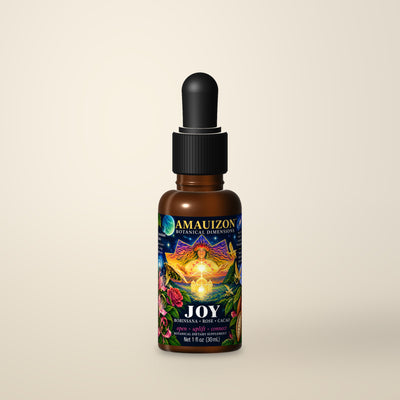
JOY · Botanical Dimensions
JOY pairs Bobinsana with organic Damask rose and an organic cacao extract from Camino Verde: cacao's long history of celebration, in a botanical elixir.
Explore JOYAma Cacao and JOY are foods and botanical preparations, not medicines. These statements have not been evaluated by the Food and Drug Administration. These products are not intended to diagnose, treat, cure, or prevent any disease. Cacao contains caffeine and theobromine; keep it away from pets.
Plants, places and people
Sources
- Zarrillo S. et al. (2018). The use and domestication of Theobroma cacao during the mid-Holocene in the upper Amazon. Nature Ecology & Evolution
- Lanaud C. et al. (2024). A revisited history of cocoa domestication in pre-Columbian times. Scientific Reports
- Southgate D. & Roberts L. (2020). Ecuador's cacao. ReVista, Harvard University
- Jaimez R.E. et al. (2022). Cacao in Ecuador: Nacional and CCN-51. PeerJ 10:e12676
- ICCO (2020). Revision of Annex C: fine or flavour cocoa exporters
- Amazonian Chakra, Napo, Ecuador — FAO GIAHS
- Camino Verde — Dandelion Chocolate (chocolate maker's sourcing report)
- From bean to bar with Vicente Norero — Ritual Chocolate (2025)
- Díaz-Muñoz C. & De Vuyst L. (2021). Yeast starter cultures for cocoa fermentation. Frontiers in Microbiology
- How the cacao industry has taken off in Hawaiʻi — Hawaiʻi Public Radio (2023)